

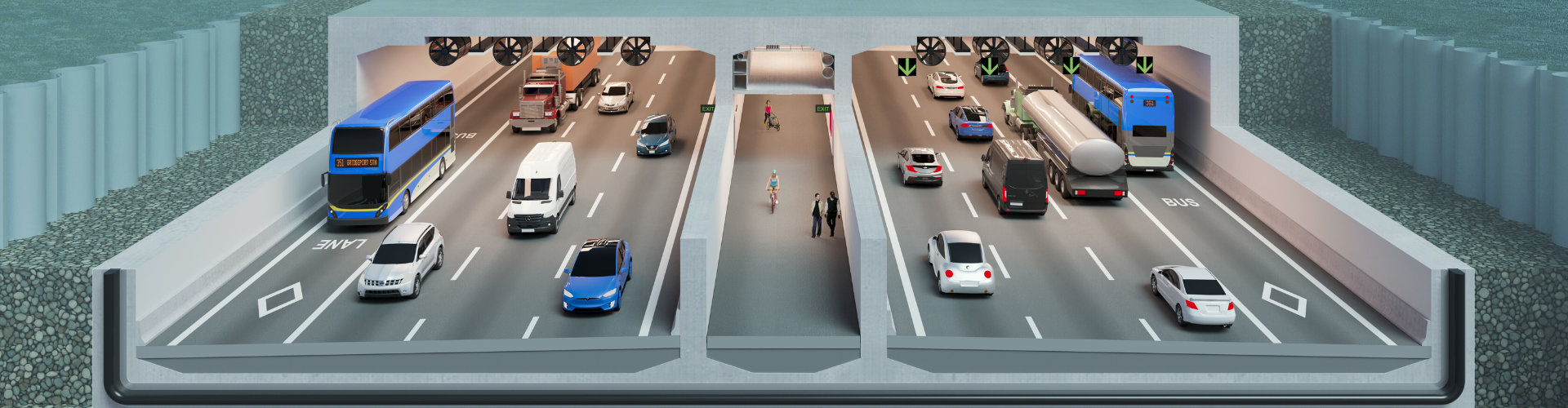
Pile driving as part of the Fraser River Tunnel Project
Pile driving will be required throughout preparatory construction work to install:
- Steel retaining walls:
- around the Deas Island casting basin to secure the excavated areas where concrete tunnel elements will be cast and stored, and to help prevent groundwater seepage
- east of the existing tunnel in the Fraser River to protect the existing George Massey Tunnel during construction
- in the Fraser River along the Richmond shoreline, just east of the current tunnel, to help fill in a small bay and increase the work area
- Steel foundations:
- for temporary jetties on both sides of the Fraser River for receiving materials
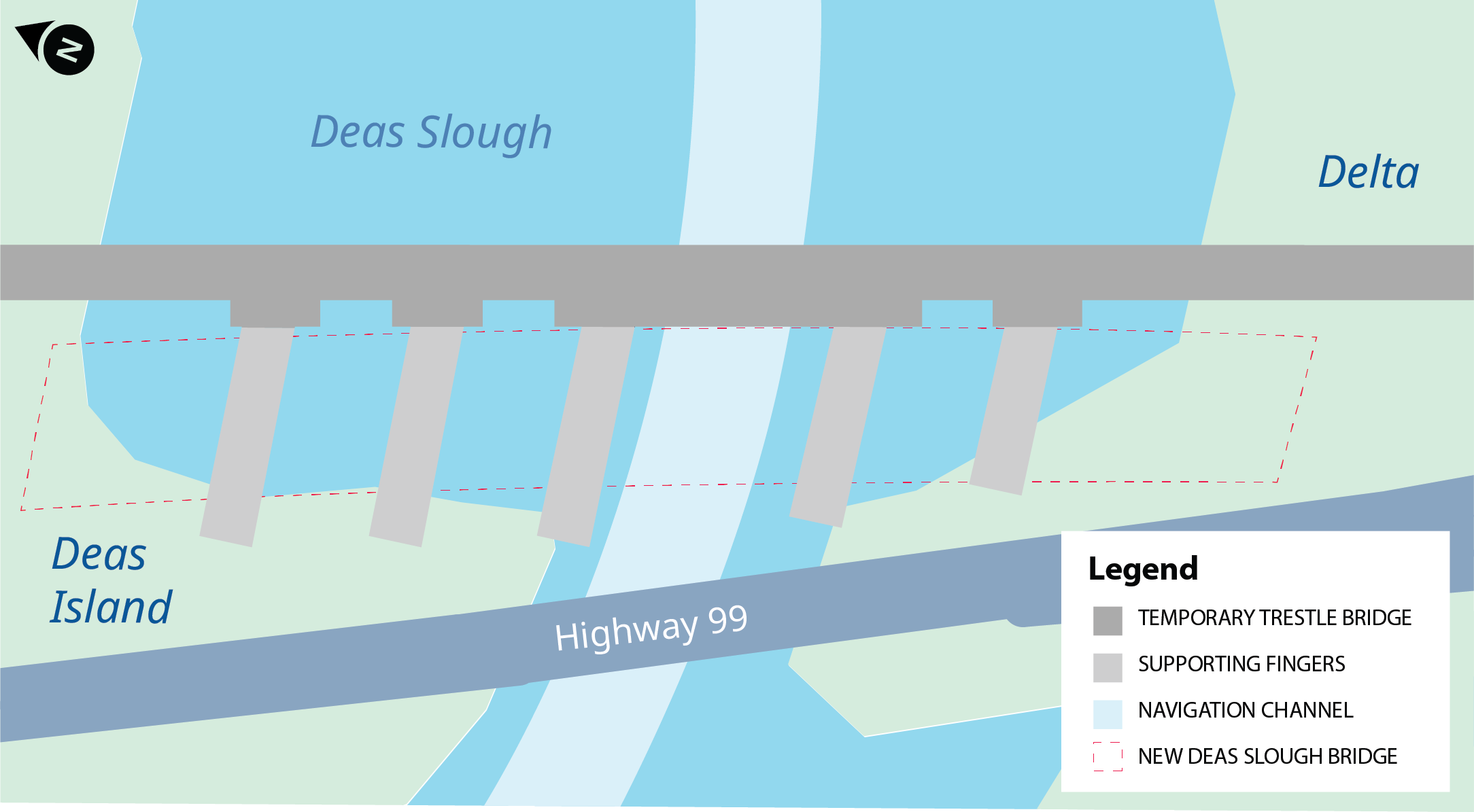
- for the temporary trestle bridge just east of the existing Deas Slough Bridge
Work hours:
Preparatory construction work may include activities occurring up to 24 hours a day, Monday through Saturday. Sunday work may also be required in some circumstances. Certain activities, including piling, will occur only during approved work hours, which will be communicated as those times are finalized.
An increase in noise and vibration can be expected while piling and related activities are underway. If feasible, noise-dampening materials may be installed around the equipment to help reduce noise impacts.
A combination of vibratory hammering and hammer piling will be used:
- Vibratory hammering: Uses high-frequency vibration to soften the ground material around the segment of steel being installed. Vibratory hammering can often be used at shallower depths.
- Hammer piling: Uses vertical impact to steadily hammer steel segments deep into dense ground. Hammer piling is typically required after vibratory hammering once a steel segment has reached resistance.
Construction of the Temporary Trestle Bridge and the Pile Driving Process
To support construction of the Fraser River Tunnel Project, crews will build a temporary trestle bridge just east of the existing Deas Slough Bridge. The temporary trestle bridge will provide construction crews with direct access to and from Deas Island outside of the Highway 99 corridor. Construction of the trestle bridge will take place between October 2026 and winter 2027.
Supporting fingers will also be installed to support construction of the new Deas Slough Bridge. The construction plan and timing for the supporting fingers are still being finalized. More information will be provided in advance.
Pile driving is required to install the trestle bridge foundations, ensuring the structure can safely support construction traffic including heavy trucks and equipment.
Steel Foundation Installation
See below for a step-by-step process illustrating how the steel foundations will be installed. A similar process will be followed for all pile driving activities required for the Project.
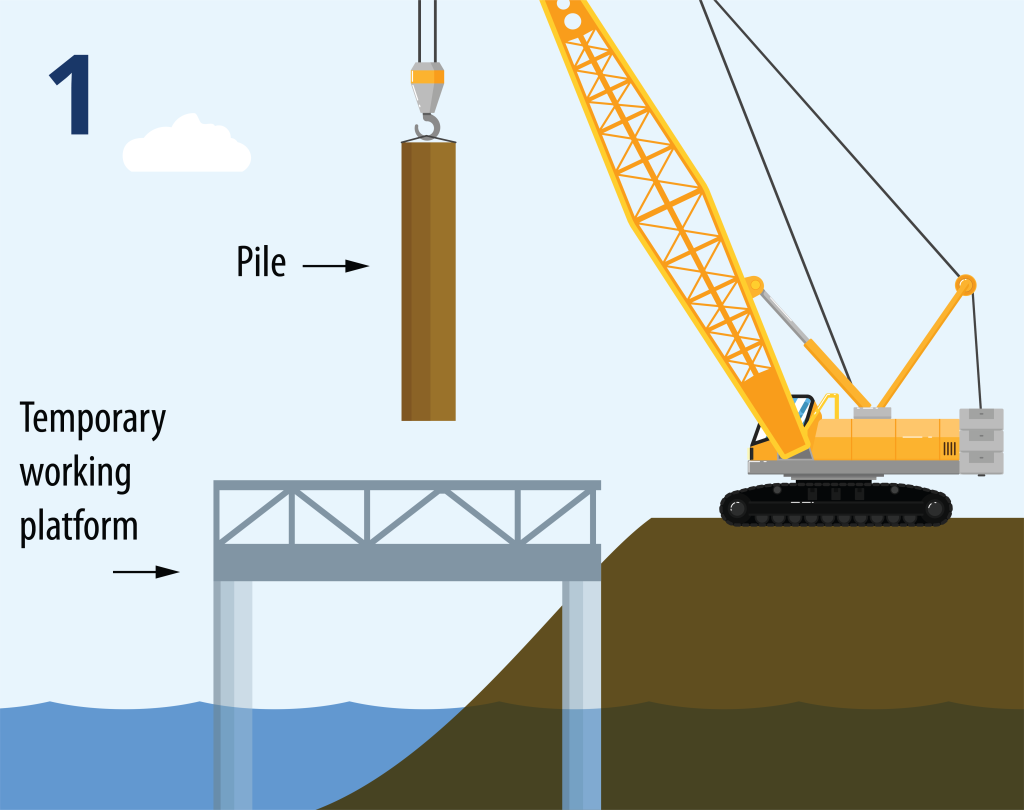
STEP 1
A temporary working platform to support crew access and activity is installed and a steel pile is lifted into position.
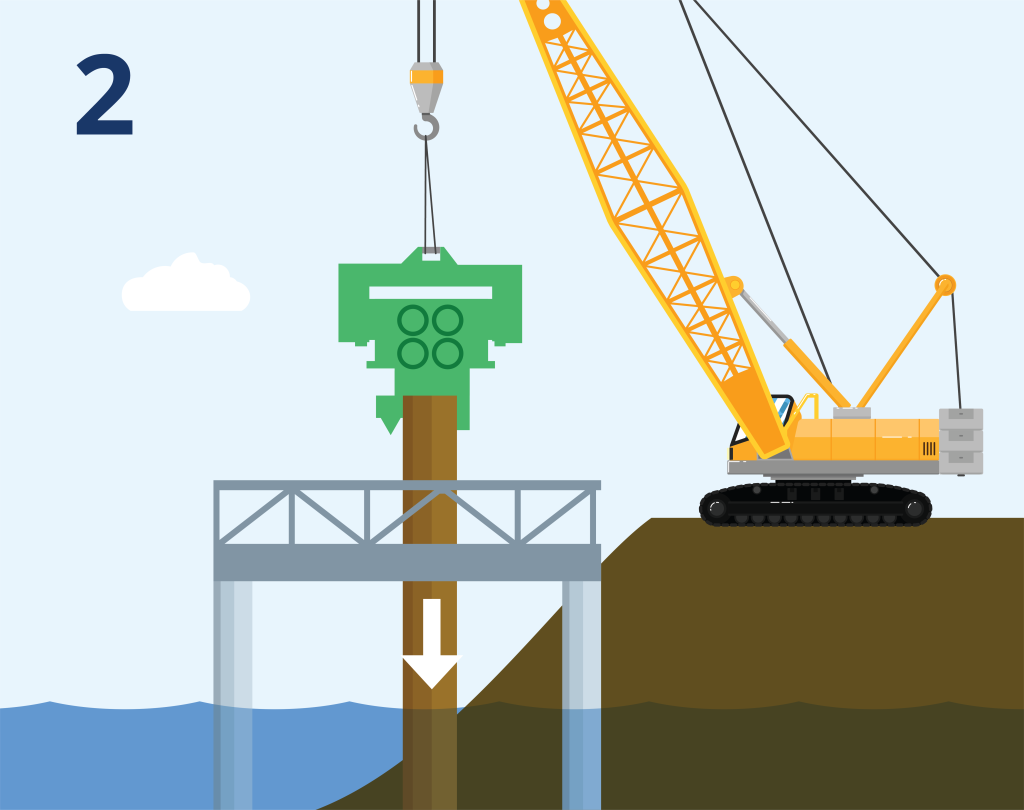
STEP 2
A vibratory hammer is secured on top of the steel pile and used to vibrate the pile steadily into the ground.
STEP 3
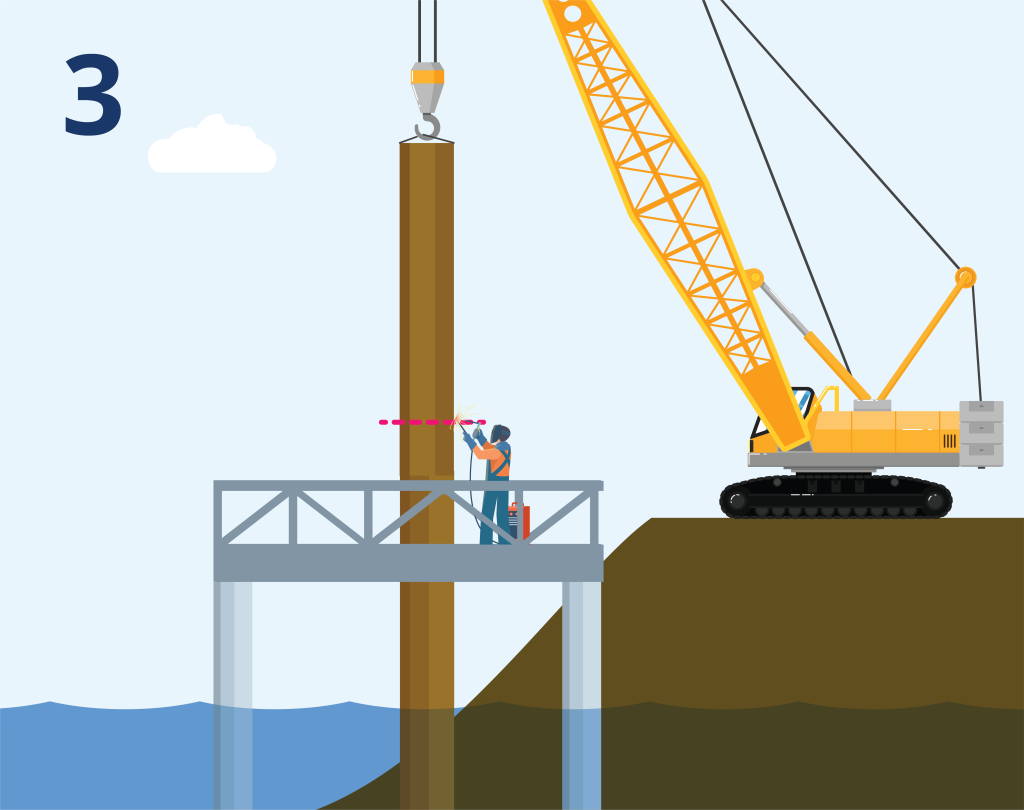
Once the steel pile reaches its required depth, another steel pile is stacked on top and the two are welded together. The vibratory hammer and welding process is then repeated until the steel pile reaches resistance.
STEP 4
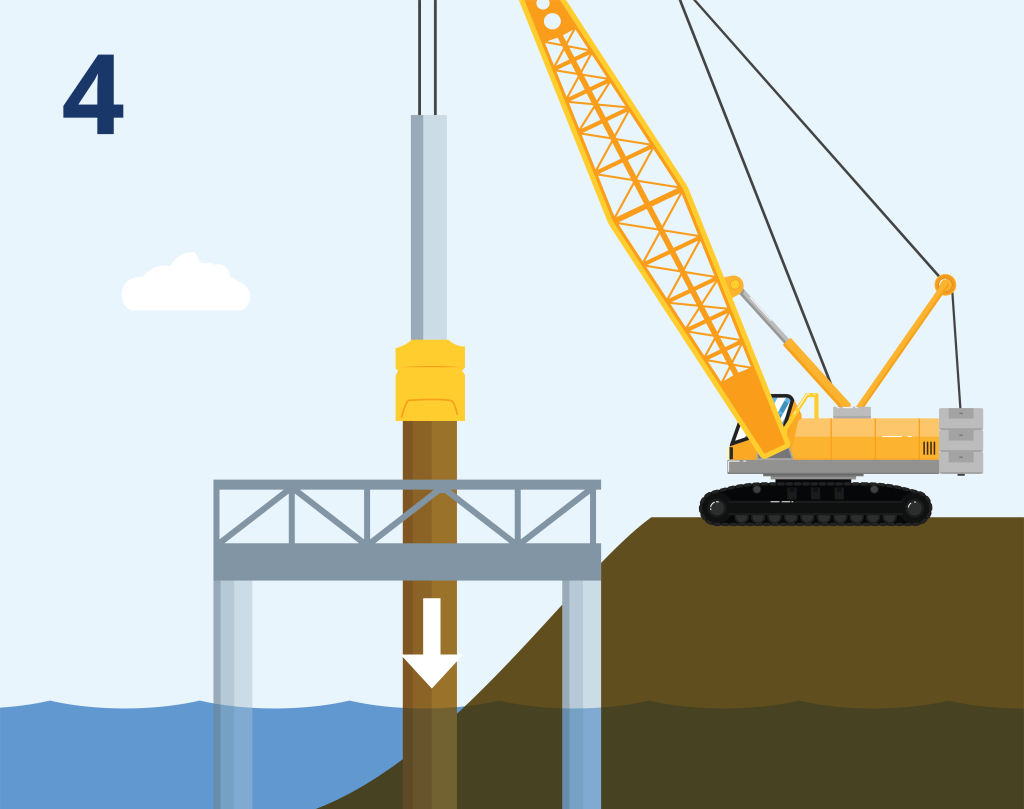
The pile driving hammer is then secured on top of the steel pile and used to hammer the pile until it reaches its final depth. This is now called a steel column.
STEP 5
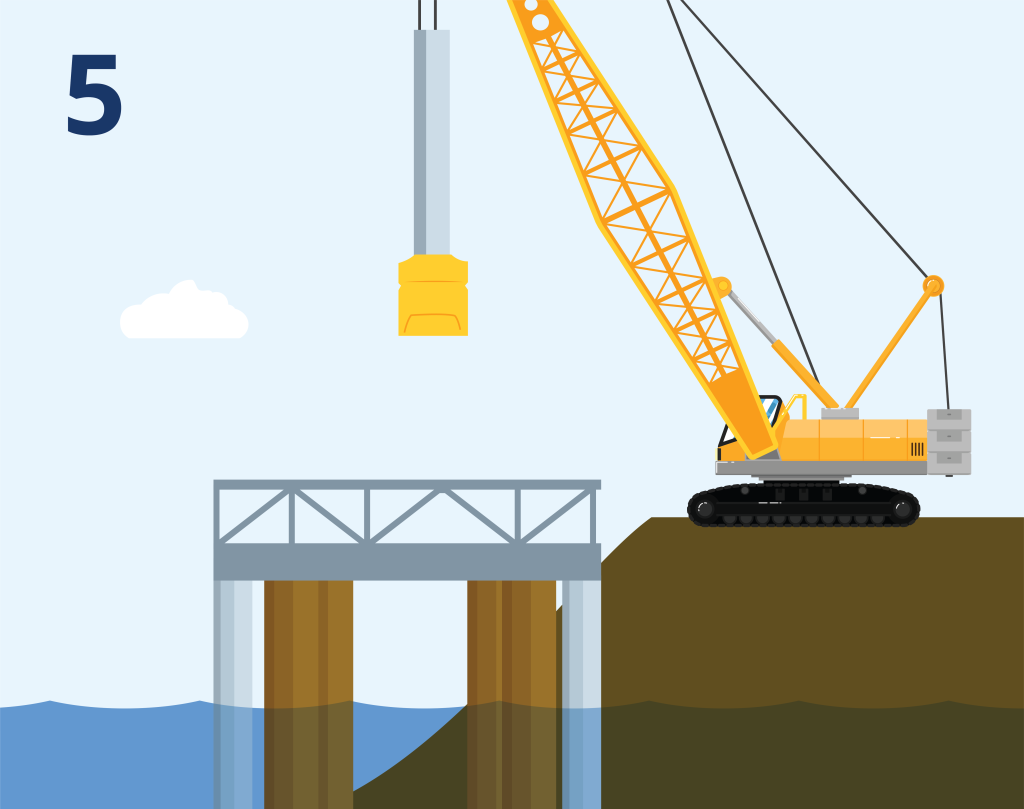
This entire process is repeated until four steel columns have been driven to their final depths. They are then cut to the same height.
STEP 6
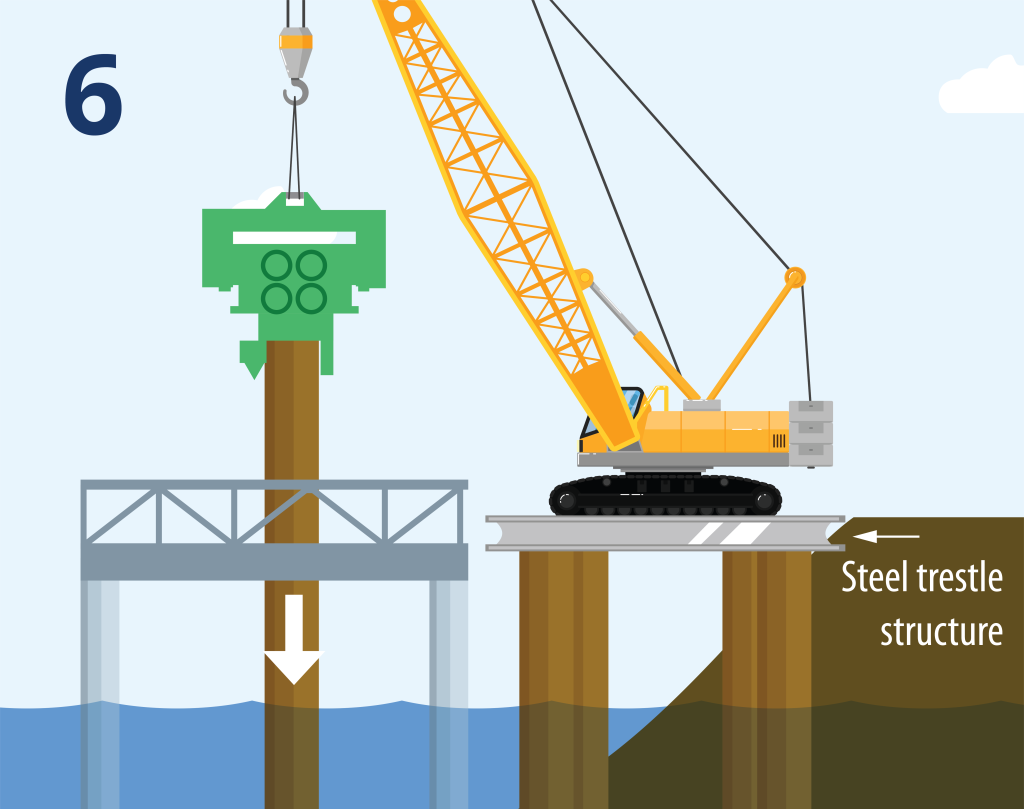
The steel trestle structure is then laid across and secured in place. The temporary working platform is shifted and the process is repeated.